
Discernment counselling · Hong Kong & Asia

Discernment counselling when one of you is unsure

Standard couples therapy assumes both partners want to repair the relationship. When one partner is unsure whether it should continue, that assumption undermines the treatment. Discernment counselling addresses the decision itself.

A woman pausing where two trails diverge on a green Hong Kong ridge, bays and islands below

What discernment counselling is

Discernment counselling is a short, structured process of one to five sessions for couples in which one partner is seriously considering ending the relationship and the other wants to save it. The goal is a decision about direction, reached with a full understanding of what happened to the relationship and what each of you contributed to it.

The approach was developed after observing that many couples entering therapy do not share a goal. Roughly a third of couples arriving for treatment have mixed agendas, one leaning out and one leaning in, and among divorcing parents around one in four believed the marriage could still have been saved.

Standard couples therapy asks both people to do vulnerable work on a relationship that one of them has not yet decided to keep. The leaning-in partner tries harder, the leaning-out partner feels pressured and withdraws further, and both conclude that therapy does not work. The protocol did not fit the situation.

Credentials

I am a licensed clinical psychologist and I work with mixed-agenda couples using this structure and the research behind it.

The three paths

The process ends with a choice among three defined outcomes. Naming them in advance is part of what makes the process work.

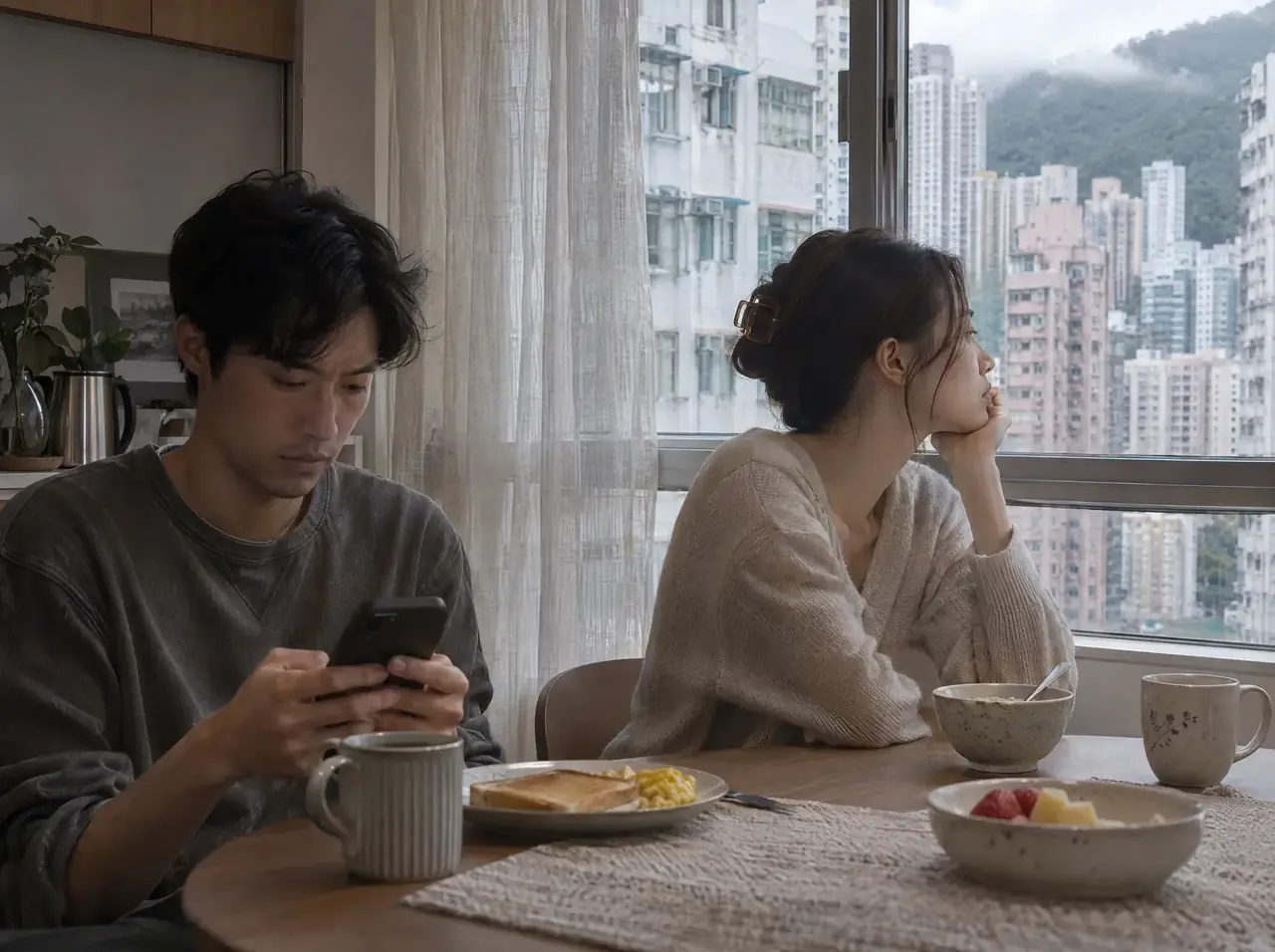
A couple at a breakfast table, one looking at a phone and the other out of the window

Status quo

Continue as you are for now, with no decision made. Sometimes it is not yet time to decide.

A man taping up a moving box in a bright, half-empty Hong Kong flat

Separation or divorce

Move toward ending the relationship with an understanding of what happened, which changes how the ending goes, particularly where children are involved.

An older couple walking side by side along the Hong Kong waterfront, talking

A committed six months

Both partners agree to a defined period of couples therapy with divorce off the table for its duration and the relationship as the agreed goal. Standard couples therapy becomes possible on this path.

What happens in the sessions

The first session lasts about two hours and later sessions are shorter. Each session has the same shape: time with both of you together, separate one-to-one conversations, and a brief joint close.

The separate conversations carry most of the work and differ for each partner. With the leaning-out partner, we look at what has happened to the relationship, what part of it is theirs, and what they would need to see to consider a path of repair. With the leaning-in partner, we work on managing the pressure to persuade, which tends to backfire, and on their own contribution to the pattern.

Each session ends with a decision about whether to continue. You are committed only to the session you are in, and the process stops at five sessions at most. The cap keeps the process pointed at a decision.

Who this is for

This fits if
  • One of you has raised leaving, or is quietly considering it
  • One of you wants to work on it and the other is unsure
  • You have consulted a divorce lawyer but are not certain
  • Previous couples therapy stalled or made things worse
  • You want to understand what happened before deciding anything
This is not the right fit if
  • You have both already decided to separate. Mediation or co-parenting support fits that situation.
  • You both want to repair the relationship. Couples therapy is the better starting point.
  • There is ongoing intimate partner violence or coercive control. Conjoint work is contraindicated, and I will help you find appropriate resources.
  • An untreated crisis on one side is driving the decision. That is treated first.

Questions people ask before they call

How many sessions is discernment counselling?

One to five, and never more than five. The first session is the longest, at about two hours, and later sessions are shorter. Each session ends with an explicit decision about whether to return, so you are committed only to the session you are in.

The cap keeps the process pointed at a decision. An open-ended process makes a decision harder.

Is discernment counselling the same as couples therapy?

No. Couples therapy works on changing the relationship and assumes both partners want that. Discernment counselling works on the decision about whether to try and assumes you do not yet agree.

Using couples therapy when you need discernment counselling usually makes things worse, because it puts pressure on the partner who is already leaning out. Using discernment counselling when you need couples therapy wastes time.

What if my spouse has already seen a divorce lawyer?

That is common among couples who come for this, and it rules nothing out. Consulting a lawyer is information-gathering, and many people do it because they are unsure.

What matters is whether both of you are willing to attend. If your spouse will come to one session with no commitment beyond it, that is enough to begin.

Will you try to talk us out of divorcing?

No. I have a stake in your wellbeing and none in the outcome, and I do not campaign for the marriage. A decision made under a therapist’s pressure tends to give way later.

I make sure that whichever direction you take, you take it with an understanding of what happened and what each of you contributed. That understanding shapes how well the next chapter goes, including a separation.

Book a free 20-minute discovery call.

A brief video call to talk through what you are dealing with and how we can address it. Couples attend together.